Pair Programming: Why It Should Be Called Pair Software Development
Created:
Picture by exiguus
Pair programming is more than just two developers sharing a keyboard. It’s a holistic approach to software development that fosters collaboration, knowledge sharing, and continuous improvement. In this article, we’ll explore why pairing works, how to do it effectively, and why it’s a cultural shift that can transform your team.
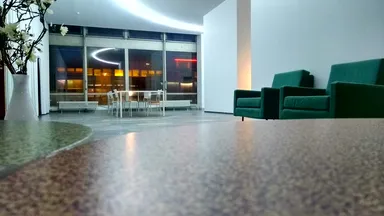
A modern, well-lit lounge area with two green armchairs in the foreground from the 50s. In the background, a glass-walled space features a white dining table and chairs, with a view of city lights at dusk. A tall white vase with decorative branches adds a touch of elegance to the room.
The Case for Pairing
I love pair programming. 😍
In my experience, it’s not just a collaboration technique—it’s a game-changer for how teams build software. And here’s a bold claim: Pair programming can be more efficient than code reviews and feature branches. When done right, it eliminates the need for both, streamlining development while improving quality, knowledge sharing, and team cohesion.
But let’s be honest—"pair programming" is a bit of a misnomer. What we’re really talking about is Pair Software Development. Because pairing isn’t just about writing code together. It’s about designing, problem-solving, debugging, and even brainstorming together. It’s a holistic approach to building software that goes far beyond the act of coding.
Why Pairing Works
1. Think Out Loud
One of the most powerful aspects of pairing is the practice of verbalizing your thoughts. When you narrate your reasoning, your partner can follow along, catch logical gaps, and contribute ideas in real time. This transparency turns coding from a solitary puzzle into a shared journey.
Example: You’re debugging a tricky issue. Instead of silently staring at the screen, you say, "I think the problem might be in how we’re handling the API response. Let me check the logs." Suddenly, your partner chimes in: "Wait, what if the issue is actually in the request headers?" Boom—problem solved in half the time.
2. Consider Your Partner
Not everyone learns or works the same way. Some people need time to process; others thrive in rapid-fire discussion. The key? Adapt.
- If you know your partner, lean into their strengths and accommodate their pace.
- If you’re new to pairing with someone, ask: "How do you prefer to work? Do you like to dive in, or take it step by step?"
Pairing only works if both people feel comfortable and engaged. It’s not about forcing a method—it’s about finding a rhythm.
3. Give Your Best
Pairing exposes vulnerabilities. You might not know the answer. You might make a mistake. And that’s okay.
- Patience is non-negotiable—with yourself and your partner.
- Mistakes are learning opportunities. A typo or a logic error isn’t a failure; it’s a chance to understand something deeper.
- No one expects you to be perfect. The goal is progress, not perfection.
4. Set a Timer
Structure prevents burnout. My preferred approach:
- 50-minute pairing sessions
- 10-minute breaks
- Role rotation (Driver/Navigator)
This keeps energy high and ensures both people stay actively involved. The Driver writes the code; the Navigator thinks ahead, reviews, and suggests improvements. Then, switch. No one gets stuck in a passive role.
The Human Side of Coding
At first, pairing can feel uncomfortable. Why? Because it humanizes programming. Suddenly, your thought process is on display. You’re not just writing code—you’re explaining, justifying, and collaborating in real time. It’s like doing a live code review, but instead of judgment, you get immediate support.
This transparency can feel exposing. You might worry: "What if I don’t know something? What if my approach is wrong?" But here’s the truth: That vulnerability is the point. It’s how we grow. It’s how we build trust. And it’s how we create better software.
Think of it like Scrum or Kanban—methodologies that thrive on visibility and collaboration. Pairing is the same, but for the actual act of creation.
The Cultural Shift
A team that embraces pairing doesn’t just ship better code. It fosters a culture of continuous improvement. Here’s how:
- Knowledge Sharing: No more silos. When you pair, everyone learns from everyone else.
- Quality by Design: Bugs are caught early. Edge cases are discussed upfront. The code is better because two (or more) minds shaped it.
- Growth Mindset: Pairing normalizes asking questions, making mistakes, and learning on the fly.
And here’s the kicker: This culture doesn’t just produce better software. It produces better developers. People who are confident, adaptable, and always growing.
Rotation: the Secret Sauce
Rotate roles and partners. If you have a team of three or more, consider rotating who pairs with whom. This prevents knowledge silos and ensures that everyone gets a chance to learn from different perspectives. Here’s how it might look:
- Developer A and B pair for 50 minutes (A drives, B navigates).
- Break for 10 minutes.
- Developer B and C pair for the next session (B drives, C navigates).
- Repeat.
This way, everyone gets a turn at the keyboard, and knowledge spreads organically across the team. No one is left out. No one becomes a bottleneck.
Why This Matters
The software industry is obsessed with efficiency. We measure velocity, we optimize pipelines, we automate everything. But we often overlook the human element—the fact that software is built by people, and people thrive when they work together.
Pair Software Development isn’t just a technique. It’s a philosophy. It’s a recognition that the best code isn’t written in isolation—it’s co-created. And the best teams aren’t collections of individuals—they’re collaborative units that lift each other up.
Try It Yourself
If you’ve never tried pairing (or if you’ve tried and it didn’t stick), give it another shot. Start small:
- Pick a task that’s not too complex.
- Set a timer for 25–50 minutes.
- Agree on roles (Driver/Navigator).
- Talk. A lot.
You might be surprised by how much you learn—and how much faster you move.
Feedback
Have thoughts or experiences you'd like to share? I'd love to hear from you! Whether you agree, disagree, or have a different perspective, your feedback is always welcome. Drop me an email and let's start a conversation.